
Johns Hopkins UniversityEst. 1876
America’s First Research University
Now Browsing:
The Decline of Free Expression in the 21st Century
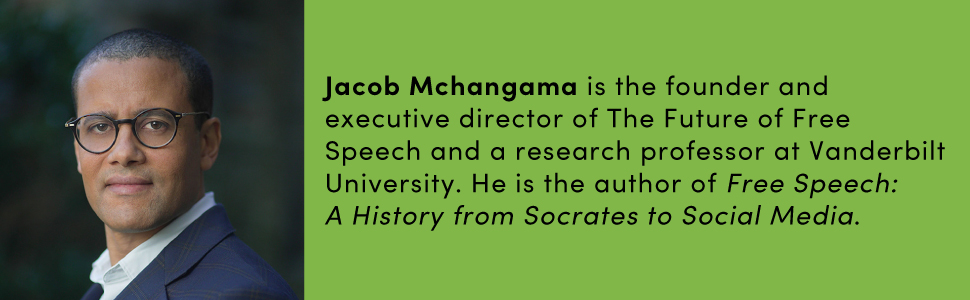
Free speech has long been considered a cornerstone of democratic life. It's a safeguard for dissent, innovation, and accountability. But in The Future of Free Speech, Jacob Mchangama and Jeff Kosseff argue that this foundational right is now facing a profound global crisis.
Drawing on legal history, international case studies, and contemporary debates, the authors trace what they call a “free speech recession”—a period in which hard-won protections for expression are eroding across both democratic and authoritarian societies.
The book charts the remarkable expansion of free speech over the past century. From postwar democratic reforms to the rise of First Amendment protections in the United States, the 20th century saw unprecedented growth in legal and cultural commitments to open expression. Yet this expansion, the authors argue, has not held. Today, governments across the political spectrum are increasingly willing to regulate speech—whether through laws targeting misinformation, restrictions on “harmful” content, or renewed interest in defamation and censorship.
The authors explore the forces driving this retreat. Mchangama and Kosseff examine how concerns about disinformation, hate speech, and national security have led to sweeping new restrictions, even in liberal democracies. These measures, often introduced with good intentions, can have unintended consequences—chilling dissent, empowering political actors to suppress criticism, and providing cover for authoritarian regimes to justify their own crackdowns. The rise of digital platforms and artificial intelligence further complicates the landscape, enabling both the rapid spread of speech and its equally rapid suppression at unprecedented scale.
The Future of Free Speech does not frame this issue in partisan terms. Instead, it presents a broad, international perspective, showing how pressures on speech transcend national boundaries and political ideologies. The result is a nuanced account of how legal, technological, and cultural shifts are reshaping the boundaries of expression worldwide.
This book outlines practical strategies for reversing the free speech recession. These include strengthening protections against abusive lawsuits, promoting transparency, decentralizing control over online discourse, and embracing the principle of “more speech” as a response to harmful ideas. At the heart of their argument is a belief that the solution to the challenges of modern communication is not less speech, but better speech.

Incredibly timely and important, The Future of Free Speech offers a compelling case for why free expression still matters—and what is at stake if it continues to decline.
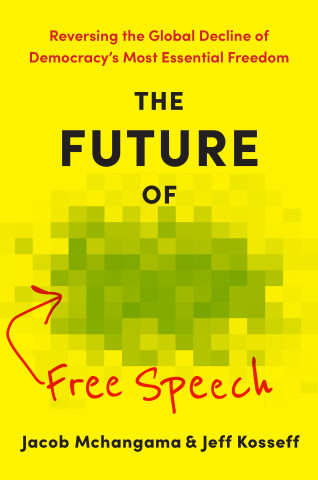
The Future of Free Speech
Reversing the Global Decline of Democracy's Most Essential Freedom
Publication Date
Login to View & Leave Comments
The U.S. at 250: A Semiquincentennial Reading List
The United States of America turns 250 years old this July — and in that time a lot of history was made!To commemorate the occasion, we dove into our catalog to surface a selection of the books and journals published by Hopkins Press exploring milestone events...

Davida Breier Joins AUPresses Board of Directors
Hopkins Press is pleased to celebrate Davida Breier, Co-Director of Sales and Marketing for the Books Division and Director of Hopkins Fulfillment Services (HFS), on her appointment to the Association of University Presses Board of Directors.

Wendy Queen Honored with 2026 AUPresses Constituency Award
Hopkins Press is proud to celebrate our Chief Transformation Officer Wendy Queen, who has been named the recipient of the 2026 Association of University Presses (AUPresses) Constituency Award.

Login to View & Leave Comments