Related
Related Books


Reviews
Reviews
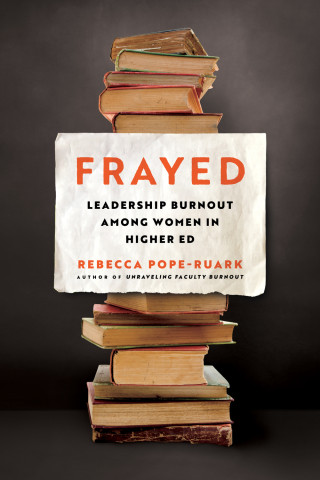
Pope-Ruark turns the compassionate perspective she previously brought to understanding faculty burnout to thinking about the 'impossible jobs' done by so many women leaders on college and university campuses. Frayed is filled with actionable advice on how to mitigate burnout at the personal level, but far more importantly presents compelling ideas about how to prevent it at the institutional level, offering strategies for starting a process of deep cultural assessment and change.
Uncertainty and the chronic stress associated with it is now the norm in higher education. Pope-Ruark's timely book on leadership burnout in higher education does the important work of bringing visibility to the gendered aspects of burnout for modern women in academic leadership. This book offers concrete steps that faculty, administrators, academic leaders, and most importantly, campuses can take to understand, illuminate, and address burnout for women leaders.
Through powerful narratives and incisive analysis, Frayed exposes the structural and cultural forces that render these roles unsustainable—too often at significant personal cost. This book not only deepens our understanding of leadership in today's academic landscape, but also issues an urgent call to build more humane, sustainable environments where leaders—and the institutions they serve—can truly thrive.
About
Book Details
Release Date
Publication Date
Status
Preorder
Trim Size
6
x 9
Pages
184
ISBN
9781421455341
Illustration Description
2 line drawings
Table of Contents
Table of Contents
Acknowledgements
Frayed: Women Leaders Burning Out in Higher Ed
1. The Uphill Climb of Women in Leadership
2. When Demands and Resources Don't Match: Workload and Control
3. When Benefits
Table of Contents
Acknowledgements
Frayed: Women Leaders Burning Out in Higher Ed
1. The Uphill Climb of Women in Leadership
2. When Demands and Resources Don't Match: Workload and Control
3. When Benefits and Costs Don't Add Up: Rewards and Community
4. When Work and Heart Don't Align: Fairness and Values
5. Addressing Burnout: What If?
Appendices
Appendix 1: Understanding Your Resources and Demands
Appendix 2: Articulating Boundaries
Appendix 3: Job Crafting Practice and Questions
Appendix 4: Well-Being and Balance
Appendix 5: A Note About Coaching vs. Therapy
References

Featured Contributor
Rebecca Pope-Ruark, PhD
Rebecca Pope-Ruark, PhD, is the director of the Office of Faculty Professional Development at the Georgia Institute of Technology. She is the author of Unraveling Faculty Burnout: Pathways to Reckoning and Renewal and the coeditor of Of Many Minds: Neurodiversity and Mental Health Among University Faculty and Staff and Redesigning Liberal Education: Innovative Design for a Twenty-First-Century...
