Johns Hopkins UniversityEst. 1876

America’s First Research University

Back to Results
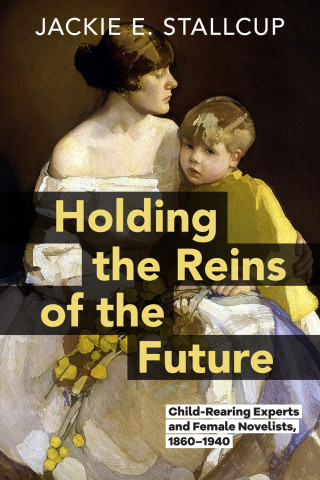
Cover of "Holding the Reins of the Future" by Jackie E. Stallcup, featuring a painting of a woman holding a child in warm brown and yellow tones.
Preorder
Cover of "Holding the Reins of the Future" by Jackie E. Stallcup, featuring a painting of a woman holding a child in warm brown and yellow tones.
Share this Title:

Holding the Reins of the Future

Child-Rearing Experts and Female Novelists, 1860–1940

Jackie E. Stallcup

Publication Date

How women novelists reshaped the rules of motherhood and claimed authority over the future.

Debates about how to raise children have always been debates about power, authority, and the future. In Holding the Reins of the Future, Jackie E. Stallcup examines the vigorous nineteenth- and early twentieth-century arguments over child-rearing and shows how four influential novelists—Martha Finley, Louisa May Alcott, L. M. Montgomery, and Jean Webster—engaged with these arguments in fiction written for young readers.

Child-rearing manuals of the period prescribed proper maternal conduct while defining...

How women novelists reshaped the rules of motherhood and claimed authority over the future.

Debates about how to raise children have always been debates about power, authority, and the future. In Holding the Reins of the Future, Jackie E. Stallcup examines the vigorous nineteenth- and early twentieth-century arguments over child-rearing and shows how four influential novelists—Martha Finley, Louisa May Alcott, L. M. Montgomery, and Jean Webster—engaged with these arguments in fiction written for young readers.

Child-rearing manuals of the period prescribed proper maternal conduct while defining the limits of women's authority. Stallcup places these manuals alongside the novels they helped shape, analyzing ongoing exchanges about discipline, education, religion, scientific expertise, and the meaning of motherhood. Finley's Elsie Dinsmore series advances a vision of Christian parenting as moral power. Alcott reimagines the "model child," replacing passive obedience with energy and moral growth. Montgomery questions the authority of scientific child-rearing experts and asserts the importance of children's rights. Webster turns to orphan care, exploring how women could exercise executive authority within institutional settings. These writers did not simply reject domestic ideology; they worked within its language and expectations, expanding the boundaries of women's influence.

These novels offered young female readers roles that were at once culturally legible and quietly transformative. Children appear in these texts as embodiments of imagined national and moral futures, and motherhood emerges as a site of contested cultural authority. Holding the Reins of the Future shows how fiction became a means through which women claimed interpretive and moral authority over the next generation.

Reviews

Reviews

Jackie Stallcup's engagingly written book offers a fascinating look at how the fiction of four important authors for girls responded to the child-rearing theories of their day. This study is a must read for anyone interested in the nineteenth and early twentieth-century social history of childhood.

Jackie Stallcup's engagingly written book offers a fascinating look at how the fiction of four important authors for girls responded to the child-rearing theories of their day. This study is a must read for anyone interested in the nineteenth and early twentieth-century social history of childhood.

Holding the Reins of the Future contributes brilliantly to ongoing critical conversation on the long-standing relationship between literature, gender, representation, and culture. Stallcup's insightful analysis reveals the radical potential embedded within classic domestic texts, demonstrating the ways in which women writers used their stories to negotiate real-world power and authority.

About

Book Details

Release Date
Publication Date
Status
Preorder
Trim Size
6
x
9
Pages
200
ISBN
9781421455471
Table of Contents

Table of Contents
Introduction: Shaping Imagined Futures: Women, Children and Power
1. Living Epistles: Protestant Evangelical Child-Rearing in Martha Finley's Elsie Dinsmore Series
2. "More Like a Great

Table of Contents
Introduction: Shaping Imagined Futures: Women, Children and Power
1. Living Epistles: Protestant Evangelical Child-Rearing in Martha Finley's Elsie Dinsmore Series
2. "More Like a Great Family than a School": Louisa May Alcott's Model Children and Domestic Utopia
3. "She Knew She Wanted to Kiss Him": Scientific Child-Rearing and Women's Authority in L.M. Montgomery's Works
4. "Constructing the Nation" One Orphan at a Time: Congregate Child-Rearing in Jean Webster's Daddy-Long-Legs and Dear Enemy
Conclusion: Calling Dr. Spock!
Bibliography

Author Bio
Featured Contributor

Jackie E. Stallcup

Jackie E. Stallcup is a professor of English at California State University, Northridge.